Each May, the American Association of Endodontists (AAE) declares Save Your Tooth Month to remind us of an important reality: modern endodontics saves teeth that 20 years ago were considered lost. If you've ever been told a tooth "can't be saved," this article is for you. The technology and techniques used today bear little resemblance to those of a generation ago — and the impact on your smile can be enormous.
The quiet shift in endodontics
For decades, endodontics had a bad reputation: painful, long, with high failure rates. That image no longer matches reality. Today's endodontics, performed by specialists using modern technology, achieves success rates above 90% at 10 years. The advances that have transformed the field include:
1. Operating microscope
Magnification of up to 25x with coaxial illumination. It allows the endodontist to see and treat accessory canals, fractures and internal structures invisible to the naked eye. An endodontist with a microscope locates on average 15-20% more canals than one without.
2. Nickel-titanium rotary system
Traditional stainless-steel files were rigid and could deviate from the canal trajectory, especially in curved roots. Nickel-titanium rotary files are flexible, follow the canal's natural anatomy and significantly reduce the chance of fractures or perforations.
3. Electronic apex locator
Previously, canal length was estimated only from radiographs. Today, the electronic apex locator measures the exact canal length with millimetric precision, even when obstructions would obscure the radiograph.
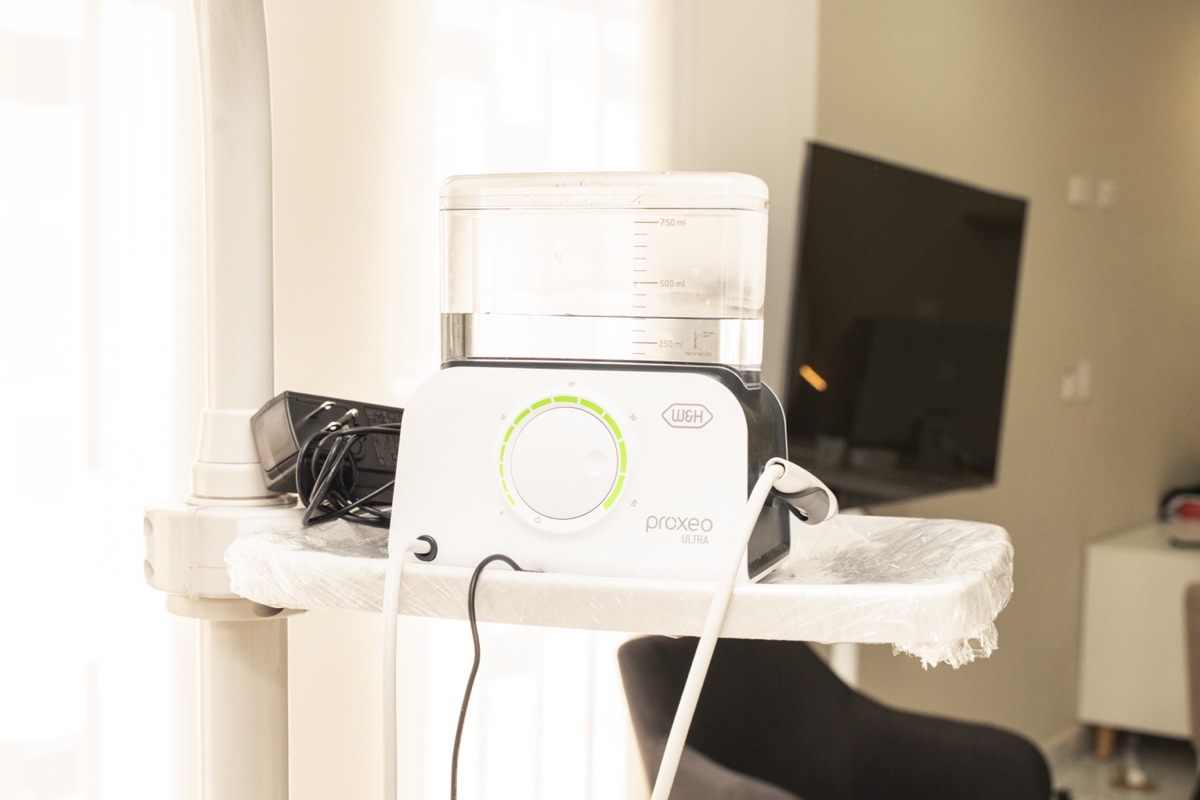
4. Ultrasonic-activated irrigation
Traditional disinfecting solutions only cleaned where the file mechanically reached. Ultrasonic-activated irrigation lets solutions reach isthmuses, accessory canals and areas no mechanical instrument can enter, eliminating bacteria that previously survived treatment.
5. Three-dimensional obturation with thermoplastic gutta-percha
Final sealing is no longer a simple cold-cone fill. Modern techniques use thermoplastic gutta-percha that flows and seals the entire canal-system anatomy, including lateral branches.
Teeth that can now be saved
These are situations that previously condemned a tooth to extraction and today have favorable endodontic outcomes:
- Retreatment of failed root canals: many can be successfully redone with a microscope, removing the previous material and locating canals not detected before.
- Calcified canals: teeth where the canal has narrowed to the point of seeming "closed." With magnification they can be located and recanalized.
- Large apical lesions: extensive peri-apical radiolucencies usually resolve with proper treatment; when they don't, apicoectomy (apical microsurgery) is a third option with a high success rate.
- Incomplete root fractures: some can be stabilized depending on location and extent.
- Early internal and external resorptions: conservative treatment is often possible.
- Instruments fractured inside the canal: they used to force extraction; today they are recovered with a microscope in many cases.
Why does it matter to save the natural tooth?
There is increasing evidence that no artificial replacement matches the natural tooth. A well-placed implant is an excellent option when there is no alternative, but compared to a natural tooth preserved with endodontics, the natural tooth wins in:
- Proprioception: you feel the exact biting pressure; implants lack that fine sensation.
- Physiological bone maintenance: the root naturally stimulates bone.
- Adaptation to change: natural teeth adapt to small bite changes over the years; implants are rigid.
- Cost: root canal plus crown usually costs less than extraction plus bone graft plus implant plus crown.
- Total time: a root canal completes in 1-2 visits; an implant requires 3-6 months of integration before the crown.
A second opinion can change the story of your smile
At Clínica Endodontics we regularly see cases where other professionals recommended extraction, and after evaluating with operating microscope and high-resolution digital radiography we were able to offer endodontics or retreatment with favorable prognosis. It does not mean the other professional was wrong — it means a specialist has tools and training for that specific situation.
A second-opinion consultation takes less than 30 minutes and gives you concrete information: whether your tooth can be saved, how likely success is, and what the treatment involves. There is no obligation to proceed with us after the evaluation — the goal is for you to decide informed.
What you should ask before accepting an extraction
- Has this tooth been evaluated by an endodontist with an operating microscope?
- Has endodontic retreatment been considered?
- Has apicoectomy been considered?
- What is the real prognosis of each option?
- What is the replacement plan if it is extracted?
If the answers don't reassure you, get a second opinion.
Your tooth deserves the benefit of the doubt
This May, if you have a tooth sentenced to extraction, get the opinion of an endodontist before making the final decision. At Clínica Endodontics in San Miguel, we evaluate with digital radiography and operating microscope, and tell you clearly what can be saved and what cannot. Sometimes a "can't be done" becomes a "yes, it can — and it will last many more years."
Last updated: .