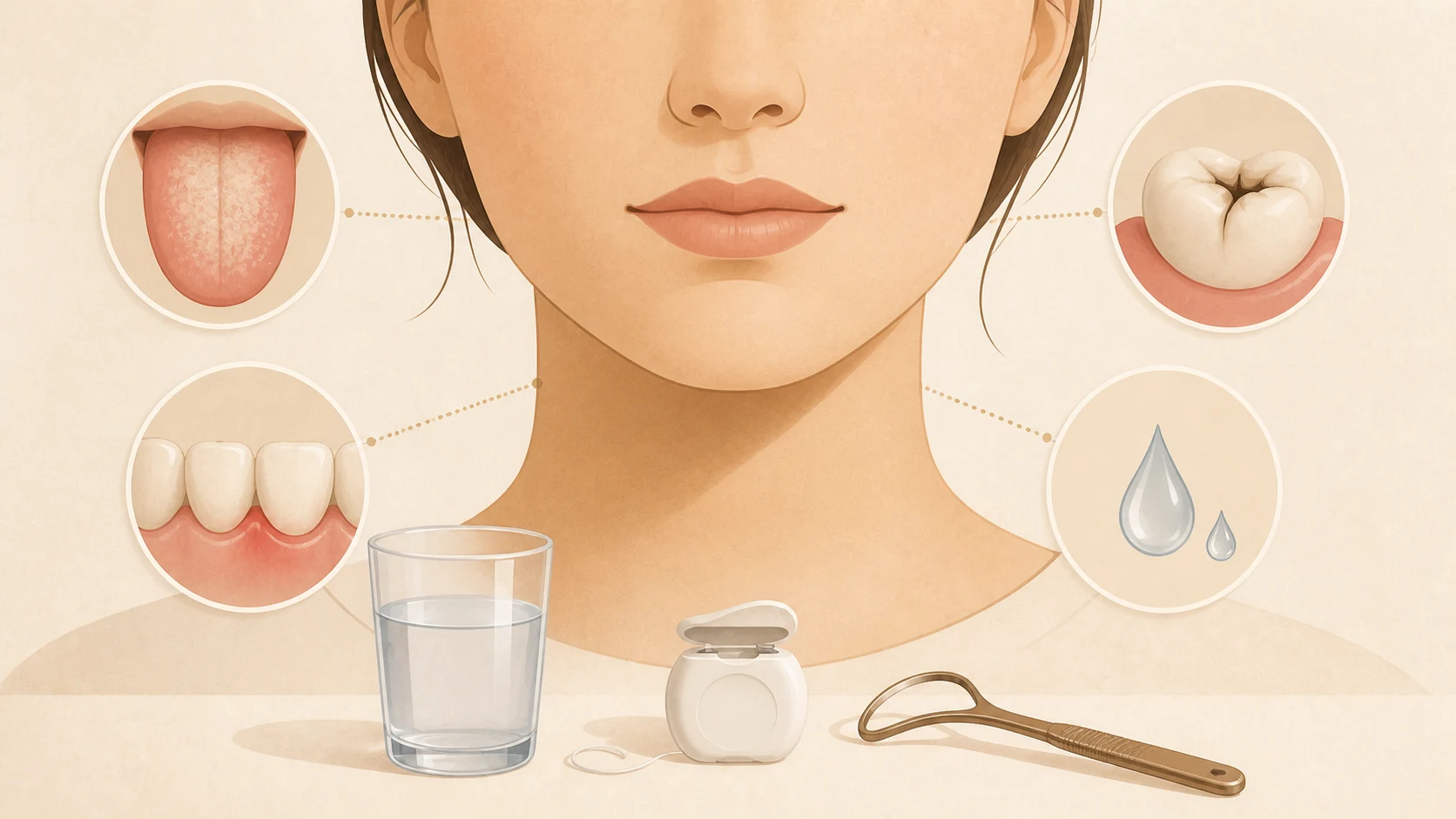
August 6 is National Fresh Breath Day in the United States, a date that uses summer to bring visibility to something many people suffer in silence: halitosis. It's a delicate topic, loaded with shame, but rarely addressed with clinical seriousness. Here we explain the real causes and what truly works.
Possible causes of bad breath
1. Bacteria on the tongue
The tongue can collect debris and bacteria that contribute to odor. Gentle cleaning may help; avoid scraping hard or injuring it.
2. Periodontal disease
Gum problems can contribute to bad breath. Gingivitis and periodontitis require evaluation to determine appropriate care; not all inflamed gums have periodontal pockets.
3. Cavities and defective restorations
Cavities and leaking fillings harbor bacteria and fermented residue. Solution: restore cavities, replace compromised fillings.
4. Endodontic infections
A dental infection may be accompanied by an unpleasant taste or odor, but these symptoms alone do not indicate necrosis or confirm the need for a root canal.
5. Dry mouth (xerostomia)
Without enough saliva, bacteria proliferate. Causes: medications, diabetes, stress, mouth breathing. Solution: hydration, saliva substitutes, treat the underlying cause.
6. Systemic problems
Some medical conditions can contribute to bad breath. Odor cannot diagnose them; if no dental cause is found, a medical evaluation may be needed.
7. Diet and habits
Prolonged fasting, ketogenic diets, smoking, alcohol, garlic/onion. Solution: hydration, moderation and habit management.
What does not replace diagnosis
- Mouthrinses: some mask odor while others have specific uses. Choose a suitable product; they do not all have the same effect.
- Sugary gum: feeds the bacteria causing the problem.
- Oral sprays: minutes-long effect.
- Homemade mixtures: these do not replace suitable toothpaste or treatment of the cause.
Measures that may help
- Brush twice daily with fluoride toothpaste.
- Daily interproximal cleaning (floss or interdental brushes).
- Gently clean the tongue with a brush or suitable cleaner.
- Drink water according to your needs and healthcare team’s advice.
- Professional cleaning and checkups according to your oral health.
- Treatment of pending cavities, periodontitis or root canals.
- Medical evaluation if everything dental is healthy and it persists.
How do you know if you really have bad breath?
Your sense of smell adapts to your own odor. A spoon or wrist test cannot establish a diagnosis. If you are concerned or someone close to you notices persistent bad breath, seek advice.
Seek an evaluation to identify the cause
At Endodontics El Salvador in San Miguel, you can seek advice about persistent bad breath. We assess possible dental causes and discuss referral when appropriate.
Last updated: .