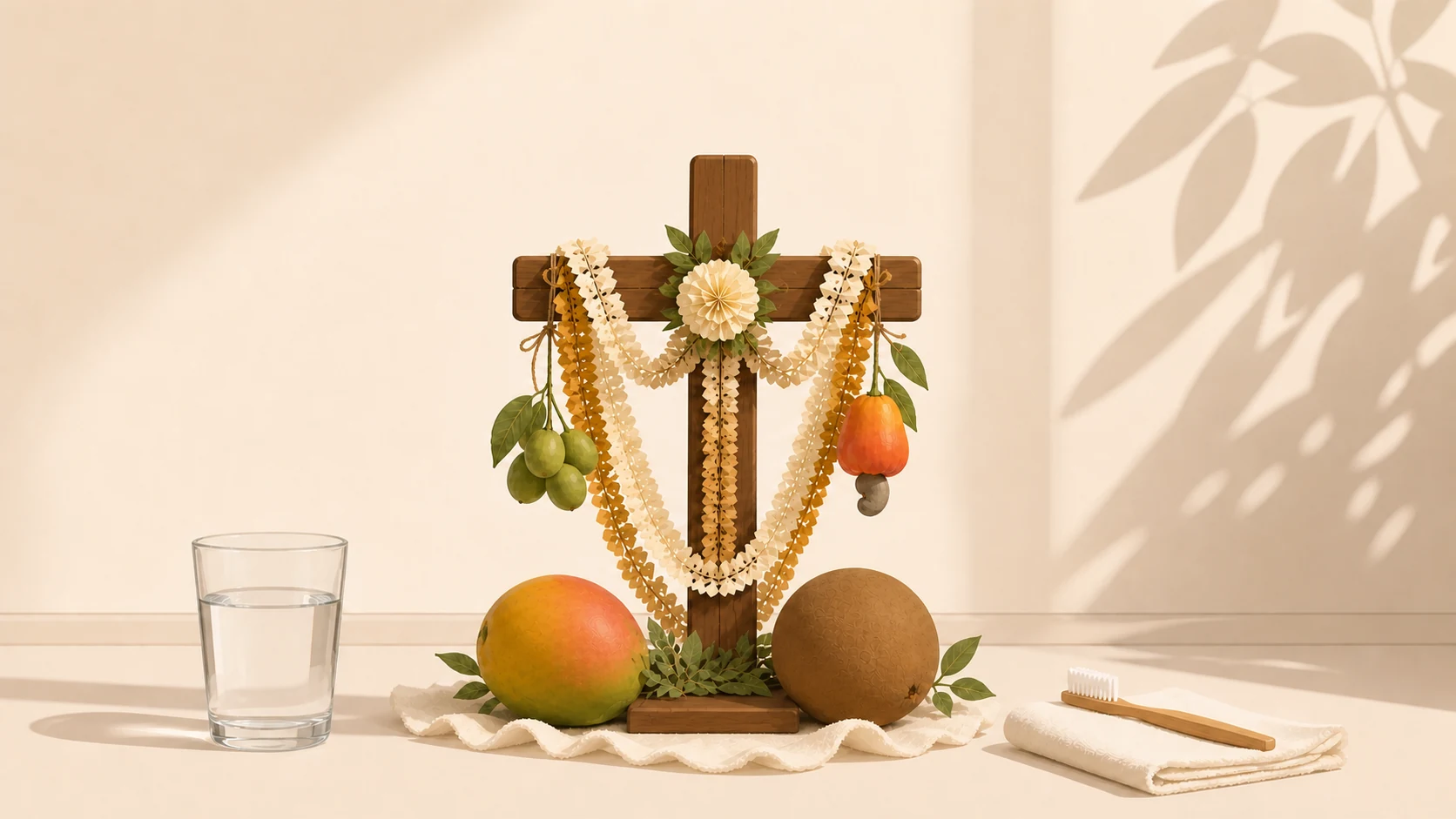
Every May 3rd, Salvadoran homes fill with color and fragrance: the Cross of the Day of the Cross is decorated with colorful crepe paper and surrounded by seasonal fruits — mangos, jocotes, mameys, nances, pineapples, cashew apples — in a tradition that blends Catholic faith and ancestral heritage. Beyond the spiritual symbolism, this celebration is also a perfect invitation to talk about something important that is rarely addressed: how the fruits that define us as Salvadorans affect the health of your teeth.
A tradition that also nourishes
The Cross decorated with fruit is part of a family and religious tradition. We can enjoy those foods while maintaining habits that care for the mouth.
Traditional fruit and oral care
Whole fruit can be part of a varied diet. Its nutritional value should be distinguished from claims that it cleans or repairs teeth:
Mango
You can enjoy whole mango as part of a varied diet. If you prepare it with added sugar, consider how often you eat it.
Jocote
Jocotes are part of the tradition. Avoid biting the pit and pay attention to added sugar in preserves or syrup preparations.
Mamey
Mamey can add variety to the diet. Care for enamel with fluoride toothpaste and seek advice about sensitivity.
Nance
Eating nance does not replace gum treatment. Seek advice about bleeding or swelling even if you eat a varied diet.
Cashew apple (the fruit, not the nut)
Enjoy the fruit and remember that sipping juice or sweetened drinks for hours increases the frequency of sugar exposure.
Pineapple
Pineapple is acidic and may be uncomfortable if you have sensitivity. It should not be used as a dental cleanser or gum treatment.
The side no one tells you about: natural sugars and acidity
A food’s effect depends on preparation, amount, and frequency, alongside your oral health. Whole fruit and drinks with added sugar have different properties; avoid continuous sugary snacking.
How to enjoy fruits without putting your smile at risk
It is not about giving up tradition, but about caring for yourself smartly. These are the basic rules:
- Rinse with water immediately after eating acidic fruits. Water washes away residual sugars and helps neutralize the pH.
- Do not brush your teeth immediately. Wait at least 30 minutes after eating pineapple, green jocote with lime, or tamarind. The enamel is temporarily demineralized by the acid, and aggressive brushing at that moment wears it down even more.
- Combine foods according to your nutritional needs; no accompanying food by itself cancels the effect of sugar or acidity.
- Avoid "jocotes en miel" as all-day snacking. It is better to consume them as a single event, as part of a complete meal, instead of leaving teeth exposed to sugar for hours.
- Brush twice daily with fluoride toothpaste and clean between your teeth daily. The texture of fruit does not replace that routine.
Children and fruits: additional considerations
Children need help with hygiene according to age. During the celebration, maintain their routine and seek advice from their dentist for symptoms:
- Limit "fruits in syrup" with added sugar.
- Offer water after each fruit snack.
- Keep up the nighttime brushing routine even on a holiday.
- Don't let them sleep with fruit residue in their mouth.
A tradition that also takes care
In many Salvadoran families, the Day of the Cross is also the moment when values around caring for the body are reviewed as part of respect for God and life. Caring for your smile fits into that same philosophy: it is not vanity, it is gratitude for what you have. The fruits placed at the foot of the Cross nourish us; taking care of ourselves while we enjoy them is part of the same gesture of reverence for abundance.
Annual dental check-up: the best ornament for your health
The Day of the Cross can serve as a reminder of an overdue checkup. At Endodontics El Salvador, you can seek advice about pain, wear, or bleeding; the evaluation with a digital periapical X-ray costs $35.
Last updated: .