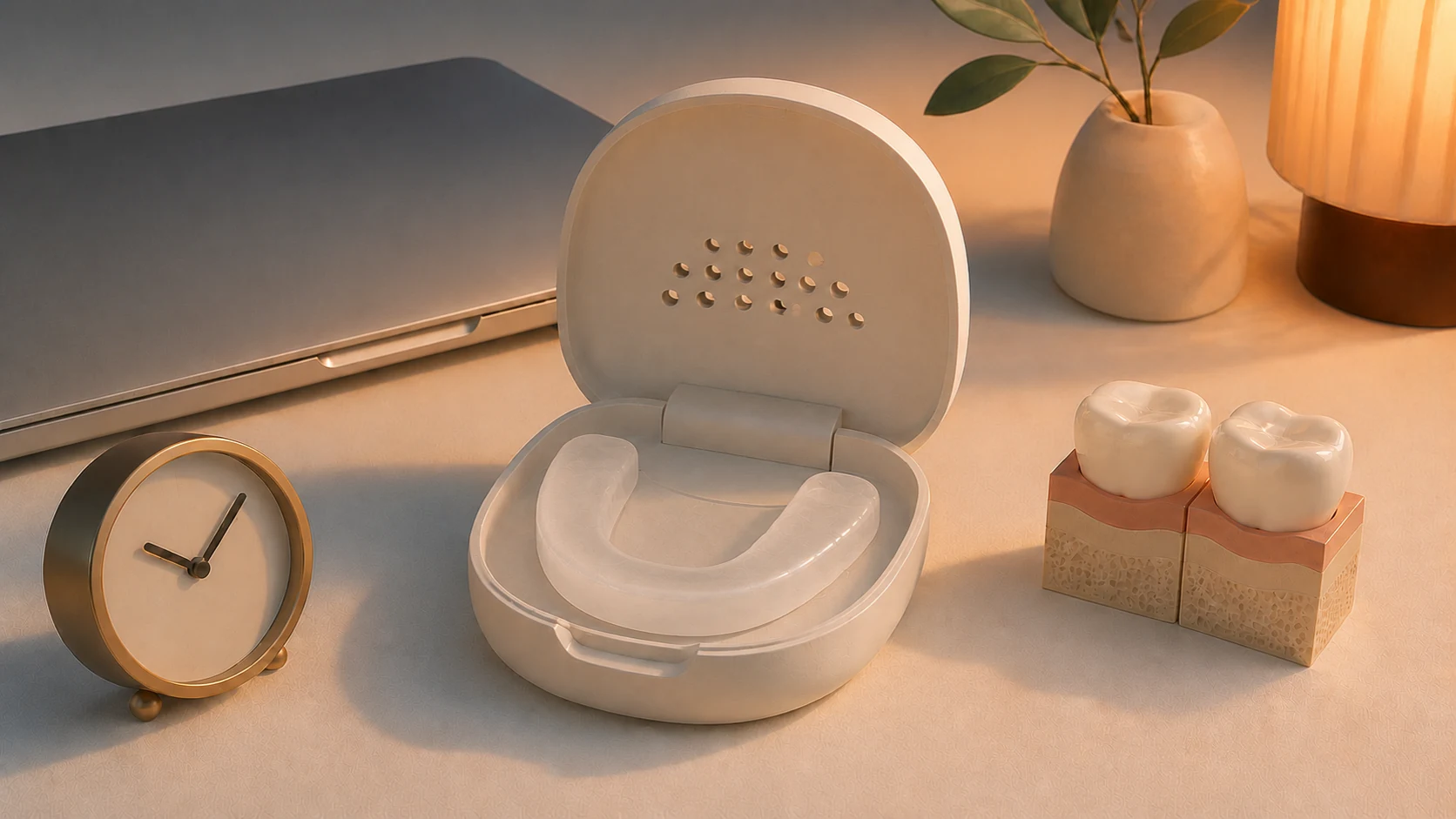
If you notice clenching at work or wake with discomfort, seek advice. Bruxism may occur during the day or sleep, with causes and effects varying between people.
What exactly is bruxism?
It can occur while awake or asleep. Some people have mild signs and do not need treatment; others need care for pain or dental damage.
The mechanism: why stress ends up in your teeth
Stress may contribute but does not explain every case. Sleep, habits, medicines, and other factors are also considered. A person’s clenching force cannot be calculated from their working hours.
How do I know if I clench my teeth without realizing it?
These changes may warrant evaluation but do not diagnose bruxism by themselves:
- Tense or sore jaw on waking, with difficulty opening the mouth fully in the first minutes of the day.
- Morning headache, especially in the temples or around the ears.
- Sensitive teeth to cold, heat or sweets, with no apparent cavity.
- Visible wear on incisal edges (front teeth look flat or chipped).
- Unexplained fractures on molars, or inlays and fillings that come loose frequently.
- Clicking or noises in the temporomandibular joint when opening the mouth or chewing.
- Bite marks on the side of the tongue or inside the cheeks.
- Chronically tense neck and shoulders — the chewing muscles are connected with the cervical chain.
Bruxism and pulpal inflammation: when it reaches the nerve
Wear, damaged restorations, or a crack can cause sensitivity and need assessment. Exposed dentin or a fracture does not automatically require a root canal; the pulp and tooth are evaluated.
What can you do today?
There are immediate steps you can incorporate into your routine and professional treatments that complement them:
Daytime awareness
Try to notice daytime clenching and let the jaw relax, with the teeth apart at rest. A reminder may help you recognize the habit.
Night guard (occlusal splint)
A mouthguard may help protect teeth when indicated, but it does not eliminate every cause of bruxism. The clinic can guide you about referral if you need one.
Underlying stress management
- Regular cardiovascular exercise (30 min, 3-4 times per week).
- Sleep hygiene: consistent schedule, no screens in the hour before bed.
- Active breaks during the workday.
- Brief breathing or meditation techniques.
Full dental exam
If you have fractures, worn restorations, or persistent sensitivity, seek an evaluation of the cause and care options.
The relationship between bruxism and root canals
Depending on its intensity and the tooth’s condition, bruxism may contribute to:
- Crown fractures requiring evaluation; treatment depends on their extent.
- Vertical root fractures that, unfortunately, usually require extraction.
- Excess loading and discomfort in restored teeth; the cause is assessed before retreatment is indicated.
- Wear that may require restorations according to structural loss and function.
If you notice wear or discomfort, an evaluation allows discussion of ways to protect teeth and restorations.
If there is pain or sensitivity, don't wait
An evaluation reviews wear, the bite, and symptoms, and allows discussion of management options. Not every case progresses to fractures or requires a mouthguard.
Last updated: .